
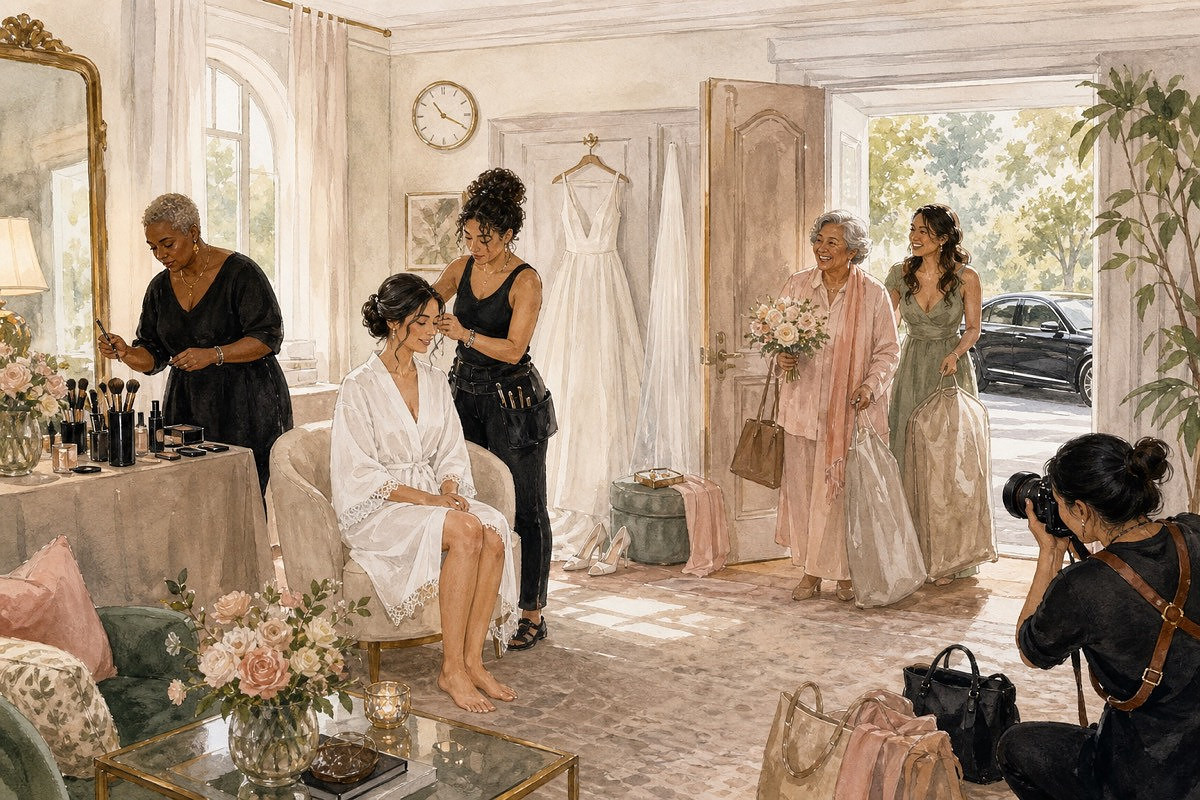
The ceremony may be the first time most guests see you, but your wedding day begins long before you walk down the aisle.
It begins in a quieter room.
There are makeup brushes on a table, garment bags by the door, coffee that keeps getting reheated, and a wedding dress waiting for its moment. A parent arrives carrying flowers. Someone looks for the missing earring. The photographer watches for the small expressions that happen before everyone is fully ready.
This first stretch can feel gentle and unhurried. It can also become the place where the rest of the day starts to rush.
Hair and makeup set the first real clock
Hair and makeup do more than prepare you for photographs. They establish the first working timeline of the day.
One person finishing fifteen minutes late may seem small while everyone is still inside the suite. The effect becomes larger when getting dressed, portraits, transportation, and the ceremony all depend on that finish time.
This does not mean the room should feel controlled by a stopwatch. It means the schedule should make space for real people. Hair texture, makeup changes, tears, meals, bathroom breaks, and the simple need to breathe all take time.
A good morning plan includes a clear finish time and a little room around it. The goal is not to rush beauty. The goal is to protect everything that comes next.
Getting dressed is part of the story
Getting dressed is often described as one line on a timeline. In real life, it is a collection of moments.
The room may need to be cleared. The dress may have buttons, a corset, or layers that take care. Family members may want to help. A parent may need a private minute before seeing you. The photographer may need to move bags, open curtains, or find a quieter corner so the photographs feel calm.
If getting dressed is scheduled too tightly, everyone feels it. The hands move faster. The room gets louder. The meaningful reactions become another task to complete.
Give this part of the morning enough time to be experienced, not just documented.
Five handoffs that quietly shape the day
- Beauty to getting dressed: the finish time needs breathing room.
- Getting dressed to photography: the room, details, and people need to be ready.
- Family arrivals to private moments: everyone needs a clear place and time.
- Photography to departure: the final frame cannot erase the travel buffer.
- Transportation to ceremony: “leave time” means the vehicle is moving.
Family arrivals change the energy of the room
The morning usually becomes more active when family and the wedding party begin arriving.
They bring love, questions, food, flowers, clothes, and sometimes their own nerves. Someone needs help with a tie. Someone else cannot find the correct entrance. A relative arrives earlier than expected and walks into a moment that was meant to be private.
Clear arrival times help protect the atmosphere. So does telling people where to go, what to bring, and who to contact if they are delayed.
The couple should not be the person answering every message. A coordinator, planner, or trusted point person should handle the practical questions so the room can stay emotionally present.
For a broader look at those roles, read Your Wedding Photographer Is Not Your Day-Of Coordinator, But Your Photos Depend on Both.
Photography coverage begins before the dress goes on
Some of the most honest wedding photographs happen before the day feels official.
They are the moments when a parent smooths the fabric on a sleeve, a friend quietly fixes a loose curl, or the room pauses after everyone sees you dressed for the first time. They are also the details that help tell the full story: the invitations, jewelry, shoes, flowers, and personal objects that carry meaning.
Those photographs need time, light, and a room with enough space to work.
If photography starts too late, the choice becomes difficult. The photographer can protect the getting-dressed moment, photograph the details, or leave on time for the ceremony location. It may not be possible to do all three with care.
Ask your photographer when coverage should begin based on what you want remembered. Then build the hair and makeup finish time around that answer.
Transportation is the quiet hinge
Transportation can look like a simple departure time. It is often the hinge between a calm morning and a rushed ceremony arrival.
People need time to gather their belongings, use the restroom, walk through a hotel, load the vehicle, settle clothing, and account for traffic. Elevators can be slow. Garment bags take space. A wedding party rarely moves like one person.
The departure time should mean the vehicle is moving, not that everyone has started looking for their shoes.
Confirm who is riding in each car, where the vehicles will wait, how drivers will reach the right person, and what happens if one person is not ready. That plan protects the couple from becoming the transportation dispatcher.
Small delays need one calm response
A wedding morning does not need to be perfectly on time to feel good.
It needs someone to notice a change early and decide what should happen next.
If hair and makeup is running behind, the answer may be to move detail photographs, shorten an unimportant pause, update the driver, or change the order in which people get dressed. The right choice depends on the day. What matters is that one person leads the response and the right people receive the same update.
A useful wedding day communication plan can settle that before the morning begins.
A simple wedding morning plan
- Confirm when hair and makeup must be complete.
- Decide who will be dressed first and who needs help.
- Give family and the wedding party clear arrival instructions.
- Place the details for the photographer in one spot.
- Name the person answering vendor and family questions.
- Confirm every vehicle, rider, driver contact, and departure time.
- Choose which moments should be protected if the morning runs late.
This is not about filling every minute. It is about giving the important moments enough room.
Where EventSync fits
A day-of coordinator leads the wedding day. They read the room, make decisions, communicate with people, and protect the couple from the operational weight of the plan.
EventSync is the coordinator's assistant. It helps keep the timeline, responsibilities, and moving parts visible and organized while the coordinator remains the human in charge. It does not replace a planner, coordinator, photographer, family member, or conversation.
If you are building the early part of your day, the free Wedding Day Timeline Builder can help you place the morning blocks before handing the final plan to the person who will lead it.
A calmer morning leaves more room for feeling
The wedding morning sets more than the schedule. It sets the emotional pace.
When the room has enough time, people can laugh, eat, help one another, and notice what is happening. The photographer can work with intention. Family can arrive without immediately being handed a problem. The couple can move toward the ceremony feeling supported instead of chased by the clock.
That calm shows up in the photographs. More importantly, it becomes part of the memory.
Planning a New York wedding with photography shaped around real timing, family, and the way your day will actually move?
Contact Kali Artistry Explore Kali Love Stories